


The outdoors isn’t just adventure, it’s medicine, too. This installment of The Outdoors Effect is about the reset that happens when the choice to slow down gets made partly for you, and you decide not to argue with it.
I dropped my twins off for the start of college orientation this week, stuck around for a couple of days, and then did the thing that made sense at the time: booked a remote historic cabin nearby instead of driving all the way home and back for a few days alone.
It’s 100 degrees, so hiking is out. The wifi genuinely does not work — not spotty, not slow, just absent. I troubleshot a bit with the owner, and then decided I didn’t want to spend any more of my vacation time cosplaying IT support. What I’ve got is a phone hotspot holding onto exactly one bar, which means anything beyond checking a text message is a negotiation.
I could have driven into town for better signal. I could have propped my phone in the one corner of the porch where it occasionally catches enough bars to load something. I didn’t bother with either.
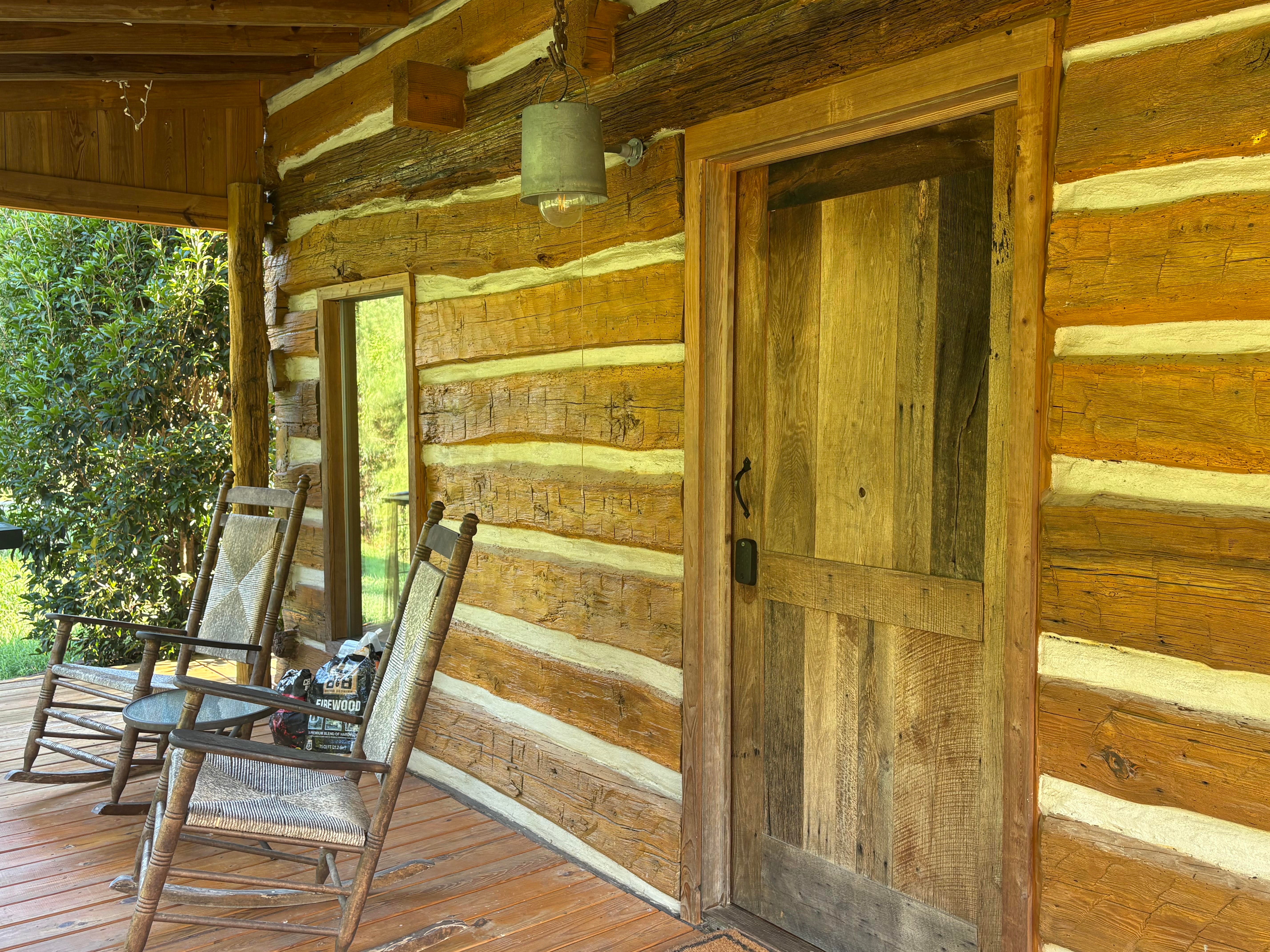
What I did have: mornings on the porch with coffee, watching whatever bird had claimed the railing as its personal office. Green in every direction — the historic property backs up to woods, and for three days I stared at more trees than screens. I wasn’t hiking through any of it. I was just sitting in it, which turns out to be its own thing.
Instead I slept in. Made real progress on my cross-stitch. Worked on the book. Did not open a single work email, because I am on vacation and I’ve decided that still means something, connectivity or not.
Your Brain on Boredom
Turns out there’s a whole body of research on what happens when you stop giving your brain something to chew on, and it’s more interesting than “you get bored and then you get over it.”
Neuroscientist Marcus Raichle coined the term default mode network back in 2001 — the set of brain regions that light up specifically when you’re not focused on an external task. Daydreaming. Staring at a gravel driveway. Cross-stitching while a show plays in the background without your full attention. That network is linked to memory consolidation, emotional processing, and — this is the part that got me — creative problem-solving. Your brain doesn’t stop working when you’re bored. It switches to a different job.
Psychologist Sandi Mann, who has spent years studying boredom at the University of Central Lancashire, found something similar from the other direction: give people a boring task first, then a creativity test, and they outperform people who skipped the boring part. She calls it the case for “the power of boredom.” Which is a very generous way of describing a woman doing cross-stitch inside while avoiding 100-degree heat because her phone won’t load anything.
Science Says: Constant Connectivity Isn’t Free
The flip side matters too. Studies on smartphone checking behavior have linked frequent notification-checking to elevated cortisol and a kind of low-grade vigilance — your brain staying slightly braced for the next input, even when nothing’s actually wrong. It’s not that phones are evil. It’s that a brain that’s always half-listening for a notification doesn’t fully get to downshift.
A bad hotspot, it turns out, is a pretty effective way to override that. Not because I’m disciplined. Because the choice got made for me, and I decided not to fight it.
The Point Isn’t the Deprivation
This isn’t a story about heroically disconnecting from everything. I checked in with the boys when the one bar cooperated (they only checked in when they wanted me to buy something). The limitation was real — I’m not pretending otherwise. But a real limitation and an unwillingness to work around it are two different things, and both were true this week.
Why This Matters
My twins just started something entirely their own, and for the first time in eighteen years, my job isn’t to manage any of the details. Not whether they brought enough socks, not the schedule, not whether they’re overwhelmed.
So I sat in a lovely cabin with one bar of service, let that be a good enough reason to stop trying to be productive, and filled the space with things that had no deadline attached. Slept in. Stitched. Wrote a little. Let the inbox sit unread, not because I had no way to get to it, but because I decided I didn’t need to fix the signal to justify resting.
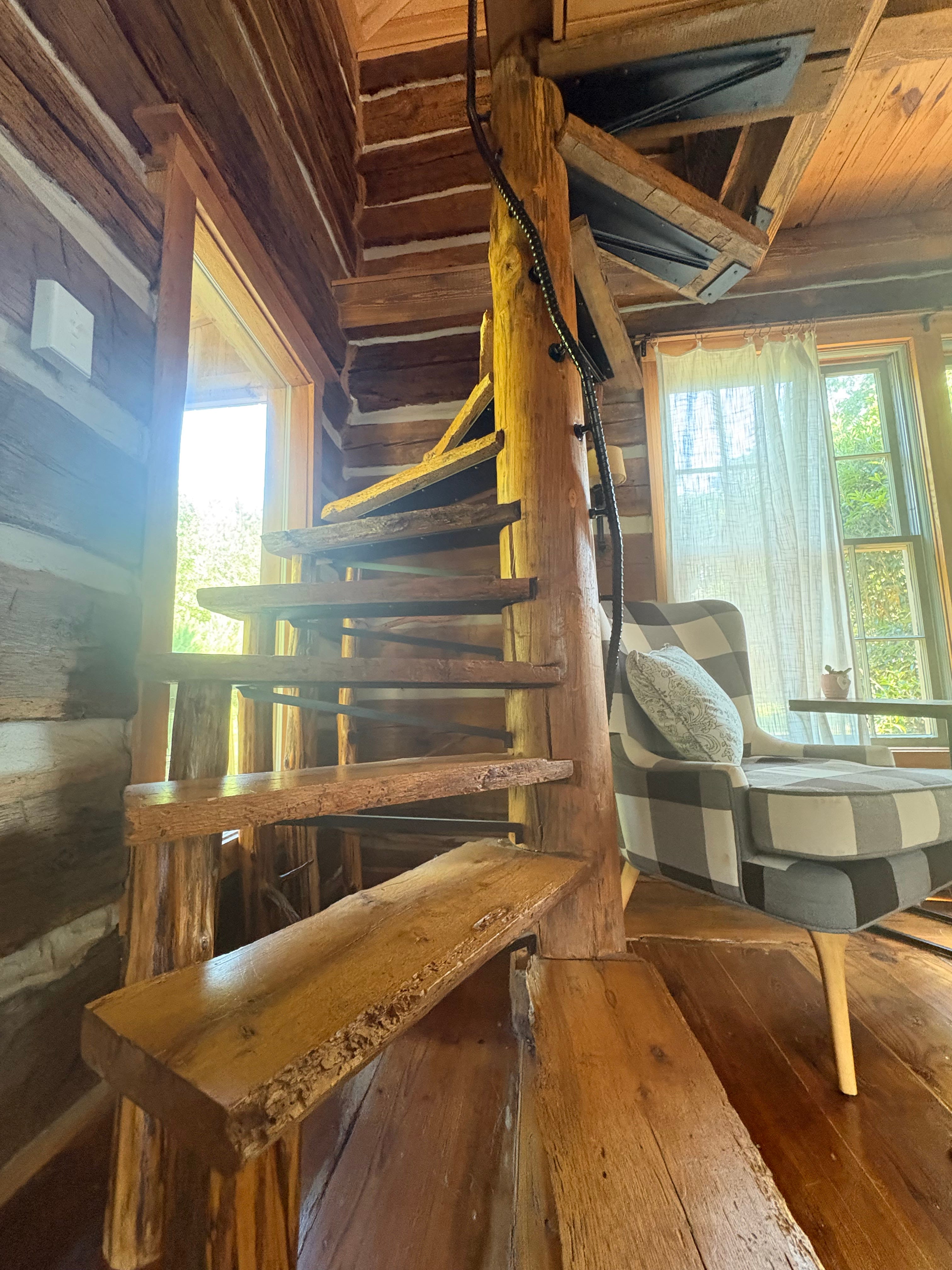
The outdoors effect this time wasn’t a hike or a paddle. It was coffee on a porch long enough to actually hear the birds instead of glancing at them on the way to the car. A few days with no plan beyond staying where the green was.
Ever had a real limitation double as a decent excuse to finally stop? Tell me what that looked like for you.
The Outdoors Effect is my ongoing series on the simple ways nature helps us reset — whether it’s water, trees, dirt, or, apparently, one stubborn bar of signal. Because the outdoors isn’t only adventure, it’s medicine, too.
This isn't a limitation but I have found on my long section hikes that the walking meditation is amazing. I feel sorry for the hikers I see who have earbuds in.
First of All: I love Your Sense of Humour ❤️ Right 👍 from the Introductory Page 📃. I have experienced this in Long Distance Train 🚂 as well as Spiritual Retreats...
Nature ✨ or the Universal ♾️ Energy....Halts Us...
Where Man 👞 Can't Stop Racing 🐎.
Love from India Ganga 🎄